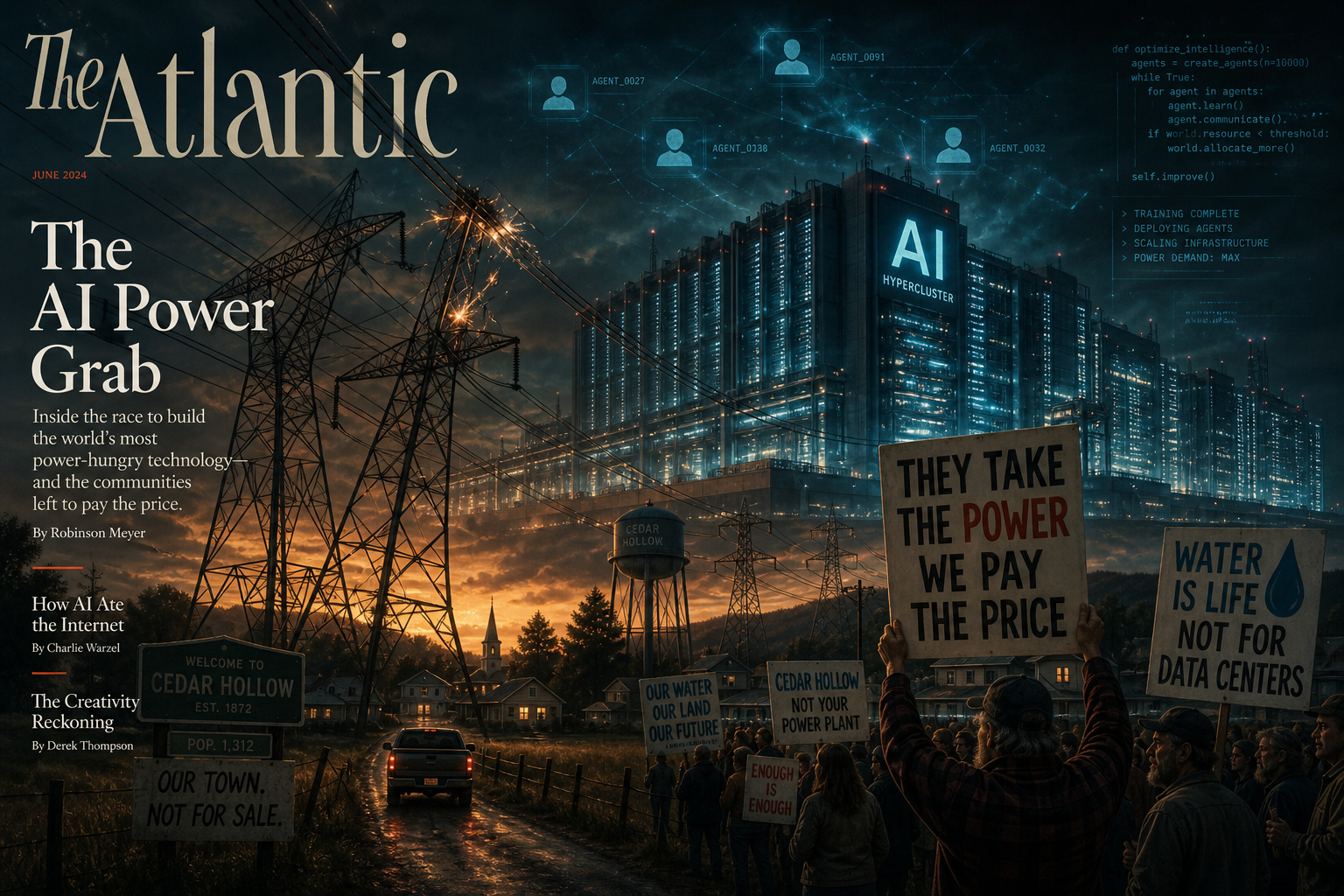
I never thought I’d see the day where farmers, Trump voters, and environmental activists would line up on the same side against Big Tech. But 2026 has a way of surprising you. More than a hundred local communities in a dozen states have already passed moratoriums on new AI data centers. They’re not waiting for Congress or some regulator in DC. They’re shutting it down at the source because the whirring servers, the constant noise, the water bills, and the lack of real jobs are hitting their towns directly.
The scale is insane. AI-related capital spending is barreling toward $750 billion this year. The US is staring down a 45 gigawatt power shortfall for these facilities by 2028. Think about that for a second. That’s the output of dozens of nuclear reactors we haven’t built and probably won’t anytime soon. Goldman Sachs ran the numbers: we’ll need 760,000 more power and grid workers by 2030. Many of those roles take three or four years of training. The AI revolution everyone keeps hyping runs on very old-school constraints like electricity and transmission lines.
At the same time, companies aren’t slowing down on the software side. Virgin Voyages went from 50 AI agents to over 1,500 in just four months. A 2,900% jump. They’ve got specialized agents handling everything from promotional emails to group bookings to what amounts to a digital version of their CEO. Result? Content production time cut by 60%, promotional output doubled, and record sales in the first months of the year. NVIDIA’s big conference this year made it clear: this isn’t pilot projects anymore. Fortune 500 outfits are putting agentic systems into actual manufacturing lines, logistics networks, and financial operations.
This split is what sticks with me. One half of the industry is racing to replace human decisions with autonomous agents that can schedule, analyze risk, debug code, and coordinate workflows. The other half is dealing with revived coal plants, air pollution that brings carcinogens, and proposals for robot dogs to handle security instead of hiring locals. Astra Taylor has been out there framing it right. This rollout happened without anyone really asking the public. Only about 10% of people are genuinely pumped about the direction AI is taking. When it shows up as a massive windowless building sucking down resources next door, the opposition crosses every political line. A recent Gallup poll showed 7 in 10 Americans don’t want these things near them, including huge majorities of Republicans.
The Utah proposal is particularly wild. It would be 2.5 times the size of Manhattan and boost the state’s greenhouse gas emissions by 50%. Memphis has Musk’s Colossus projects that pull power equivalent to hundreds of thousands of homes. These facilities create maybe 30 to 100 jobs, mostly low-wage security and maintenance. The economic benefits flow somewhere else.
The infrastructure trap
This isn’t just NIMBY stuff. It’s creating actual leverage for regular people to influence technology that otherwise gets decided in boardrooms far away. Taylor calls the data centers strategic chokepoints. They’re where the abstract hype about artificial intelligence meets the concrete reality of land, water, and energy. And communities are using that.
It gets complicated fast. The same companies talking a big game about using AI to fight climate change are the ones firing up gas turbines and idled coal plants to train the next models. The environmental math on this is ugly. Cooling these facilities drinks millions of gallons of water. The heat they throw off creates its own problems. All while we’re told this technology will solve our biggest problems.
I keep circling back to the same uncomfortable thought. Maybe we don’t need AI in every single corner of life. The agents are getting good at narrow tasks. That’s useful. But turning them loose as bosses or companions or full replacements for human judgment feels like we’re skipping some important conversations about what kind of world we want.
What’s actually happening on the model side
OpenAI dropped GPT-5.5 back in April. They call it their smartest yet, strong at agentic coding and research tasks, with a massive context window. Anthropic is killing it in enterprise reasoning with Claude models, hitting $30 billion in annual recurring revenue. Governments are stepping in with security reviews because these systems are getting sophisticated enough to worry about cyberattacks and infrastructure risks.
The narrative has shifted from copilots that help you to agents that do the work. That’s a bigger deal than most people admit. It changes the economics of entire industries. Healthcare is using it for diagnostics and admin drudgery. Finance for analysis and fraud. Software teams for everything from tests to infrastructure.
But the adoption numbers tell another story. Microsoft says global usage among working-age adults is only up a bit, to around 18%. The UAE is at 70%. The US improved but still lags. Small businesses are just now getting easy on-ramps through bundles like Claude for Small Business that plug into tools they already use.
Where this heads
The backlash is forcing a reckoning. Bills in Congress for national pauses have been introduced. Even if they don’t pass, the local actions are raising costs and slowing some projects. Cloud prices will probably climb. Companies will have to get way more efficient with their compute instead of just throwing more GPUs at every problem.
This is where applied wisdom comes in. It’s not about being anti-AI or anti-progress. It’s about admitting that raw scale has limits. The hype says build bigger. The physical world says maybe prioritize. Drug discovery and scientific breakthroughs seem like high-value targets. Having AI generate endless marketing content or act as your digital therapist? Maybe that’s where we pump the brakes.
The messy coalition fighting these data centers — rural, urban, left, right — suggests the conversation is escaping Silicon Valley’s control. That’s healthy. It forces the question: how much of this do we actually want embedded in daily life?
I’m not optimistic or pessimistic. I’m watching. The agents will keep multiplying because the economics favor it. The real test is whether the infrastructure and the public will bend to accommodate them, or whether we’ll see a more deliberate path that respects real resource constraints and democratic input. My bet is we get some of both. The next twelve months will show which force bends first. The power grid doesn’t negotiate with hype cycles. Neither do angry neighbors.
The future isn’t going to look like the glossy demos. It’s going to be negotiated in zoning meetings and utility hearings across the country. That’s probably a good thing.